The Long Night of Munich’s Museums – October 17
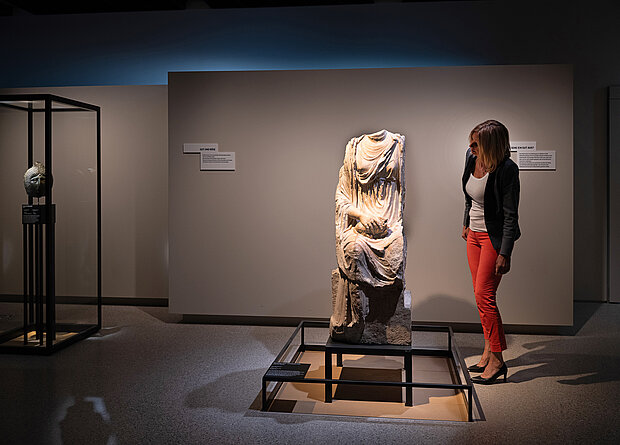
On October 17, we’ll once again be participating as one of many museums in the Long Night of Munich’s Museums. It’ll be all about archaeology, fun, spontaneity, and music!
2:00–5:00 p.m., Children’s Program:
Romans Deeply in Love
In Roman times, people wrote love vows or curses on small lead tablets. With the help of the gods, they hoped to charm or otherwise influence a particular person. These tablets were used in private life, but also at chariot races and even in business. In our museum workshop, we’ll be creating engraved metal tablets and friendship bracelets. For children ages 6 to 12; limited space available on-site. In cooperation with the Museum Education Center.
Location: MPZ Workshop (ground floor)
6:00 PM–1:00 AM Evening Program:
All About Love!
At the State Archaeological Collection, Museum Night is all about togetherness. If you don’t have a date yet, you might just find a match here. Put on your pink ribbon and let’s get started. Themed archaeological tours led by the curatorial team will take place every hour starting at 7:30 p.m. The duo Fajora will play fitting (love) songs on the hour from 7 p.m. to midnight. At the SOLA Bar, there’s a special late-night drink for newlyweds and everyone else. The rooftop terrace will be open until 10 p.m. if the weather is nice.
Location: Entire museum
Note:
The permanent exhibition is open until 1 a.m. (we’ll close from 5–6 p.m. for a brief setup period). The special exhibition remains closed.
Please note: Only the special Long Night tickets are valid for this event. Available at the evening from us, MünchenTicket or the participating venues.
We look forward to seeing you!
European Restoration Day - 18th October
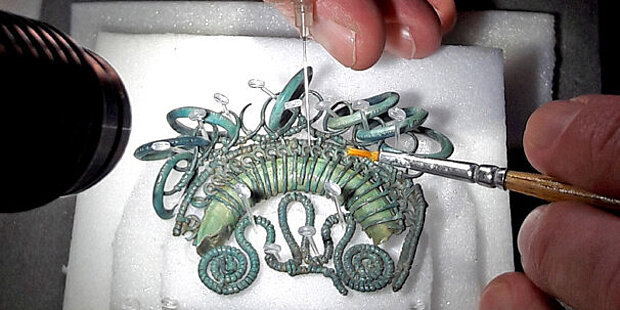
Immediately after the Museum Night, on October 18th, our restoration studios will open their doors from 11 a.m. to 5 p.m. under the theme “Up Close!” and offer visitors a chance to take a look behind the scenes. The collection of the State Archaeological Collection comprises approximately 20 million archaeological finds, primarily from Bavaria. These include everyday objects, utilitarian items, and ritual objects, as well as luxury goods, weapons, and military equipment dating from prehistory to modern times.
During the open house, visitors will gain insights into the restoration of archaeological objects. Their individual histories—including long periods of burial in the ground or in bodies of water—as well as environmental factors following their discovery lead to various types of damage. Large quantities of finds pose a particular challenge. These must be treated promptly after recovery to halt the decay process and preserve them for the future. Dealing with previous restorations has also become an important aspect of sustainable conservation. In addition, many objects are examined to investigate their manufacture, the materials used, and their condition.
The restoration team presents its current projects. Highlights include:
- Quantity Over Quality: How Do the Many, Many Artifacts End Up in Storage?
- When Metals Age: Rusty Iron and Green Copper.
- The Pot Is Broken: Modern Restoration and Roman Repair Techniques.
- Lots of Broken Glass: Tavern Culture in Shards.
- Nothing but rust left: Traces of fabrics, leather, and wood.
- What is it, and is it real or fake? Analytical instruments in action.
Curious visitors are invited to get hands-on at the event! Activities include looking through a microscope, learning about sandblasting techniques, making Roman jewelry, and piecing together shards.
Venue: Oettingenstraße 15
Cost: Free—just turn up!
Note: This event is a joint initiative of the restoration studios of the State Archaeological Collection, the Technical University of Munich (TU Munich), Chair of Restoration, Art Technology, and Conservation Science (RKK), and the restoration workshops of the Bavarian National Museum.